Whatsapp : 98409 24789
Call : 98409 24789

Individual Thila Homam – Meaning, Pitru Dosha, Benefits & Vedic Ritual Guide
Amavasya is an important tithi for offering prayers and offerings to our ancestors. Thila Homam (also called Tila Homam) is a Vedic fire ritual in which black sesame seeds and cow’s ghee are offered into the sacred fire. Families perform it with love, reverence, and gratitude while praying for the peace of departed parents, grandparents, and ancestors (Pitru Shanti). When recommended after an astrological consultation, it may also be performed as a traditional remedy for Pitru Dosha (Pitru Dosha Pariharam) and to seek ancestors’ blessings and harmony within the family.
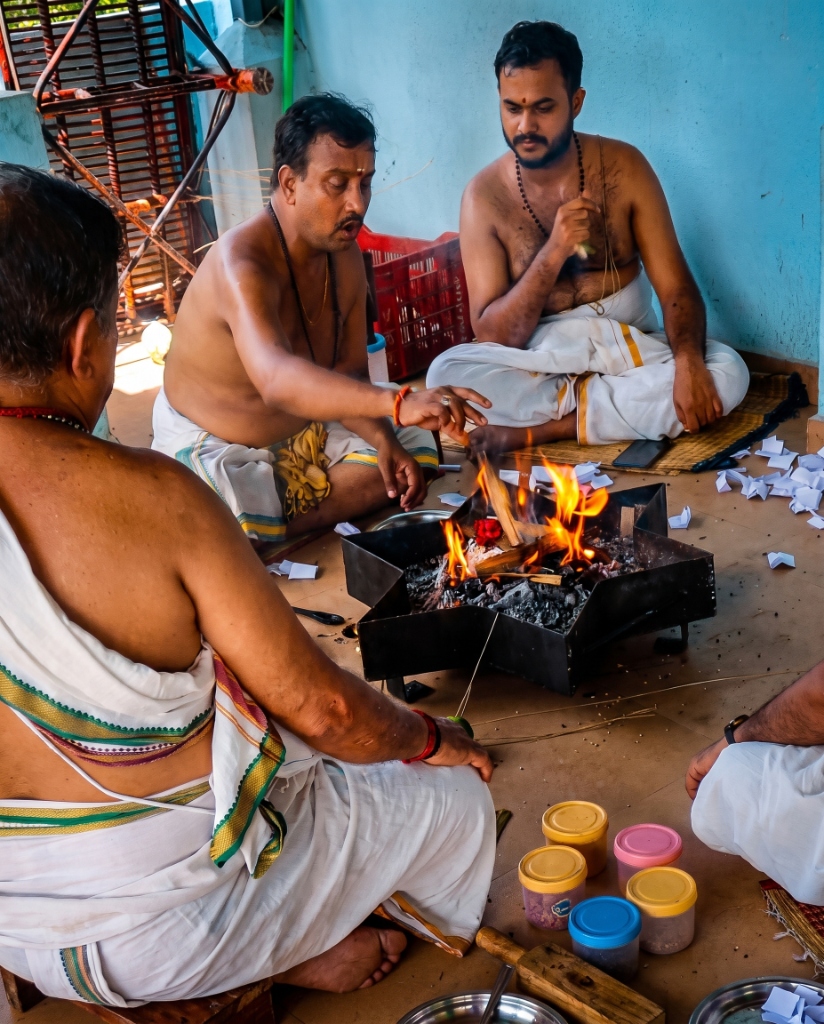
Officiated by Certified Vedic Priests at Swami Narayanan Temple
Every Thila Homam is performed individually for your family by qualified Vedic Vadhyars. We recite your family Gotram, Nakshatras, and ancestral names during the Sankalpam. Devotees worldwide can join live via video stream or receive the complete high-definition recording along with blessed temple Prasad.
Book Your Thila Homam / Check Available Dates
Fill in your details below to speak directly with Astrologer Jayashree and the Vedic priests. You will be connected straight to our official WhatsApp assistance line.
Thila Homam Packages & Transparent Pricing
Every ritual is conducted as an exclusive individual ceremony for your family. No hidden fees. Includes all sacred Vedic Samagri (black sesame, ghee, herbs), priest Dakshina, live streaming, video recording, and Prasad dispatch.
Ancestral Homam
A dedicated ancestral fire ritual for departed parents, grandparents, and 3 generations of maternal & paternal lineage.
- 3 Certified Vedic Priests conducting the sacred fire ritual
- 3 Generations Coverage (Maternal & Paternal ancestors)
- Individual Sankalpam with your family Gotram & names
- Live Video Participation + Full HD Recording
- Consecrated Prasad delivered to your doorstep
- Complete ritual materials (Black sesame, pure cow ghee, Darbha) included
28 Hells Homam
Special Vedic fire offerings and prayers for departed souls experiencing difficult transitions or untimely passing.
- 3 Certified Vedic Priests chanting Garuda Purana & Pitru Suktams
- Specialized Transition Prayers for peace and liberation (Moksha)
- Exclusive Family Sankalpam with specific departed names
- Live Stream Access + Complete HD Recording link
- Blessed Prasad dispatched Pan-India & Internationally
- All sacred Samagri & Brahmin Bhojana Dakshina included
Full Thila Homam
The most comprehensive Vedic ritual combining full 3-generation ancestral prayers, 28 Hells liberation, and grand Pitru Shanti.
- Grand Team of 8 Vedic Priests chanting powerful Vedic hymns
- Combines Lineage Homam + 28 Hells + Narayana Bali elements
- Deep Astrological Pariharam for severe Pitru Dosha
- Interactive Live Stream for all family members worldwide
- Full HD Master Video Recording delivered within 24-48 hrs
- Special Consecrated Raksha & Maha Prasad delivered
Joining Remotely from Outside India (NRI Devotees)?
We accommodate all international time zones (USA, UK, Canada, Australia, Singapore, Middle East). We provide simple international card/wire payment options and ship consecrated Prasad worldwide with express tracking.
How Your Thila Homam Works: Simple 6-Step Journey
From your first consultation to receiving sacred temple Prasad at your home, here is how smoothly the process unfolds:
Priest & Astrologer Connect
Connect with our team via WhatsApp or phone to discuss your family background, questions, and requirements.
Lineage Details Collection
Share your family Gotram, Nakshatras, names of ancestors, and relationships (even if partial or unknown, we guide you).
Date & Muhurtha Fixing
Astrologer Jayashree selects an auspicious day (Amavasya, Pitru Paksha, or a favorable lunar Tithi) tailored to your chart.
Individual Sacred Sankalpam
On ritual day, priests take a dedicated Sankalpam specifically for your family and invoke ancestral blessings.
Live Stream & Chanting
Join the live video link to watch the fire offerings, chant along, and witness the Poorna Ahuthi from anywhere in the world.
HD Recording & Prasad Delivery
Receive the full video recording within 24–48 hours, and blessed temple Prasad (Vibhuti, Kumkum, Raksha) shipped to your address.
What Is Thila Homam? (Explained Simply)
Thila Homam is an ancient Vedic fire ceremony dedicated to our departed ancestors. In Sanskrit, “Thila” means black sesame seeds, and “Homam” means offering sacred items into the holy fire (Agni). When sesame seeds and ghee are offered while chanting ancient Vedic mantras, it is believed to nourish the souls of ancestors, bringing them peace, liberation (Moksha), and immense relief from spiritual thirst.
Think of Thila Homam as a spiritual bridge. Just as we care for our living family members with food and love, Thila Homam is the sacred way our tradition honors parents, grandparents, and forebears who have passed on. Learn more about the deeper scriptural meaning of Thila Homam.
Key Highlights of Thila Homam
- Pure Vedic Fire Ceremony: Uses black sesame seeds, pure cow ghee, and sacred herbs offered into consecrated Agni.
- Dedicated to Ancestors: Directly honors departed parents, grandparents, and past generations.
- Pitru Shanti & Moksha: Prays for peaceful transition and spiritual elevation of departed souls.
- Effective Astrological Pariharam: Recommended in Vedic astrology to neutralize Pitru Dosha and ancestral karmic blockages.
- Personalized Sankalpam: Recited with your family Gotram, birth stars, and ancestor names for direct personal merit.
- Auspicious Timings: Best performed on Amavasya (New Moon), Pitru Paksha, Mahalaya Amavasya, or death anniversaries.
Why Is Black Sesame (Thila) Used in the Ritual?
In Vedic tradition, black sesame seeds are uniquely sacred to Lord Yama (the deity of righteousness and departed souls) and the Pitrus (ancestors). While white sesame seeds are used in auspicious deity pujas, black sesame holds a special spiritual frequency capable of satisfying ancestral energies.
- Spiritual Nourishment: Black sesame is said to provide lasting satisfaction to departed souls in the subtle realm.
- Karmic Cleansing: Offering sesame into the sacred fire symbolizes burning away negative ancestral debts and unresolved emotional impressions.
- Duty & Gratitude: It represents the fulfillment of Pitru Rina—the sacred debt of gratitude every human owes to their ancestors.
Read our comprehensive guide on why black sesame is central to ancestral rituals.
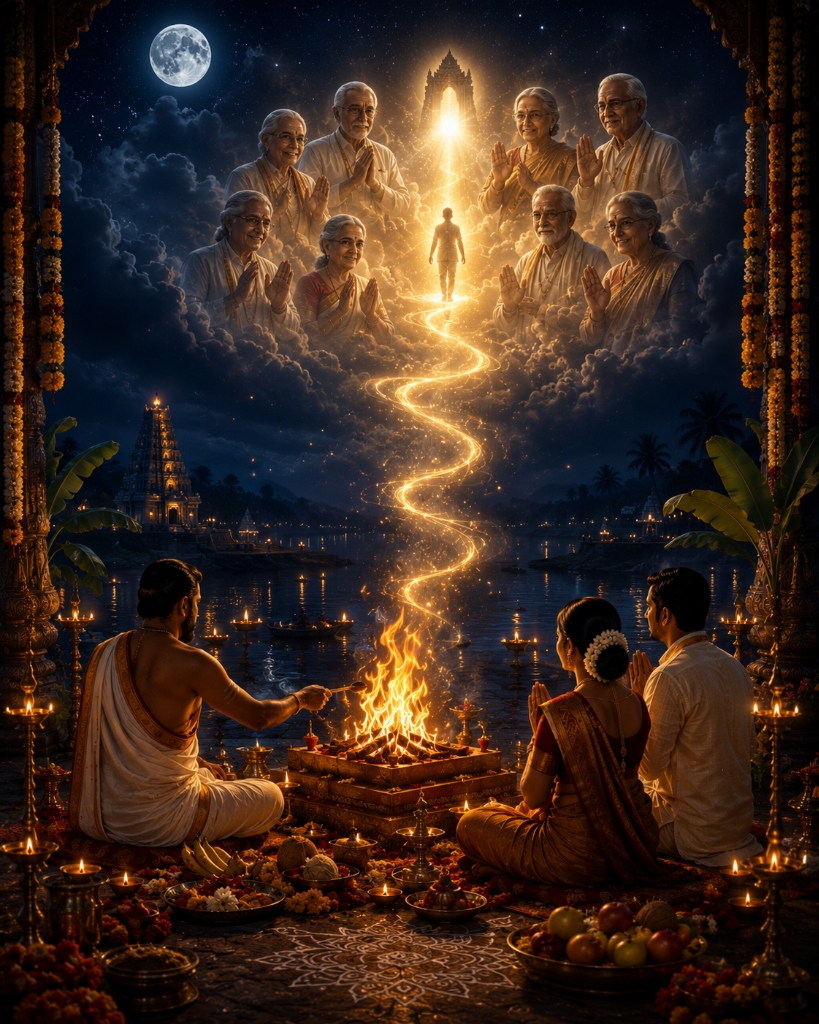
Sacred Thila Homam fire offerings connecting your family with departed ancestors for peace, liberation, and lineage blessings.
Traditional Benefits of Performing Thila Homam
When performed with genuine devotion and correct Vedic chanting, families experience profound spiritual peace and positive life changes:
Pitru Shanti (Ancestral Peace)
Brings solace and spiritual elevation to departed souls, freeing them from restlessness in intermediate realms.
Removal of Pitru Dosha
Neutralizes malefic planetary combinations in the horoscope caused by unfulfilled ancestral rites or family curses.
Clearing Marriage & Childbirth Delays
Vedic tradition recognizes ancestral blessings as essential for timely marriages, family harmony, and healthy child conception.
Career & Financial Stability
Clears unexplained chronic obstacles in business, finances, and career progression by resolving inherited karmic blockages.
Domestic Peace & Harmony
Brings mutual understanding and calmness into homes that frequently suffer from unprovoked disputes and stress.
Relief from Guilt & Mental Peace
Provides deep inner comfort to family members who could not be present during an elder’s final moments or missed yearly shraddhas.
Understanding Pitru Dosha in Your Horoscope
Pitru Dosha is not a curse from angry ancestors; rather, it is an astrological indicator of unfulfilled ancestral duties or inherited family karma that needs prayerful resolution. In Vedic astrology, Pitru Dosha is identified when key planets and houses representing father, lineage, and fortune are afflicted:
- Sun afflicted by Rahu, Ketu, or Saturn: The Sun represents the soul and the father. Afflictions indicate ancestral lineage obligations.
- Moon afflicted by Rahu or Ketu: The Moon represents the mother and maternal lineage peace.
- 9th House Afflictions: The 9th house is the house of father, fortune, and ancestral dharma. Malefic influences here create repetitive life hurdles.
Important Note: Not every problem in life is due to Pitru Dosha. A true Vedic astrologer examines the full birth chart (D1), Navamsha (D9), and current Dasha periods before recommending Thila Homam. Astrologer Jayashree provides ethical, transparent evaluations so you only perform rituals when genuinely beneficial.
Auspicious Days to Perform Thila Homam
While Thila Homam can be scheduled on any astrologically favorable day, certain lunar phases hold maximum spiritual potency for ancestor rituals:
Monthly Amavasya
Every New Moon Tithi (12 times a year). Highly recommended for all ancestor rites.
Aadi Amavasya
Sacred Tamil New Moon in the month of Aadi (July–August). Exceptionally powerful.
Thai Amavasya
Auspicious New Moon during Uttarayana in the month of Thai (January–February).
Pitru Paksha
The sacred 16-day lunar fortnight dedicated entirely to honoring ancestors (Sept–Oct).
Mahalaya Amavasya
The grand concluding day of Pitru Paksha. Best day for all unknown and known ancestors.
Annual Death Tithi
The specific lunar tithi on which an ancestor passed away.
Unsure which upcoming date fits your family? Ask our astrologer on WhatsApp to check your chart.
Step-by-Step Vedic Thila Homam Procedure
The ritual is performed according to authentic Shastras by trained Vedic Vadhyars:
Maha Sankalpam
The priest invokes cosmic coordinates (Desha, Kala) and solemnly chants your family Gotram, Nakshatras, and ancestor names to dedicate the entire merit to your family.
Ganapathi & Navagraha Pooja
Invocation of Lord Ganesha to remove obstacles and prayers to the nine planetary deities to pacify malefic influences.
Kalasha Sthapana & Pitru Avahana
Consecration of holy water vessels and invoking the sacred presence of ancestors with Darbha grass and holy mantras.
Main Thila & Ghee Fire Offerings
Chanting of sacred Pitru Suktams, Garuda Purana mantras, and offering consecrated black sesame (Thila) and pure cow's ghee into the Agni Kunda.
Poorna Ahuthi (Culminating Offering)
The grand final offering of silk cloth, dry coconut, spices, and precious herbal samagri into the sacred fire, symbolizing complete fulfillment.
Ashirvadam & Maha Prasad
Final Vedic blessings (Ashirvadam) chanted for the longevity, health, and prosperity of your lineage, followed by consecrated Prasad distribution.
What Details Are Needed for Your Individual Sankalpam?
To ensure the ritual benefits your specific lineage, we collect the following information:
Information for Sankalpam:
What if you do not know your Gotram or all ancestor names? Don't worry. In Vedic tradition, the universal Kashyapa Gotram or Sarva Pitru Sankalpam is invoked by the priests with special mantras so the blessings reach all your ancestors accurately.
Frequently Asked Questions About Thila Homam
Do I really need Thila Homam?
Can I speak to someone before booking?
Is this an individual or group ritual?
Can it be performed online?
Can relatives join from different places?
What if I do not know my Gotra?
What if an ancestor's name is unknown?
What is the difference between Thila Homam, Tarpanam and Narayana Bali?
Which dates are suitable?
What will I receive after completion?
Is online payment secure?
Ready to Perform an Individual Thila Homam?
Give your departed ancestors the peace they deserve and invite lifelong blessings into your home. Speak directly with Astrologer Jayashree and our Vedic priest team today.
Ritual Officiated at Swami Narayanan Temple • Guidance by Consult Astrology
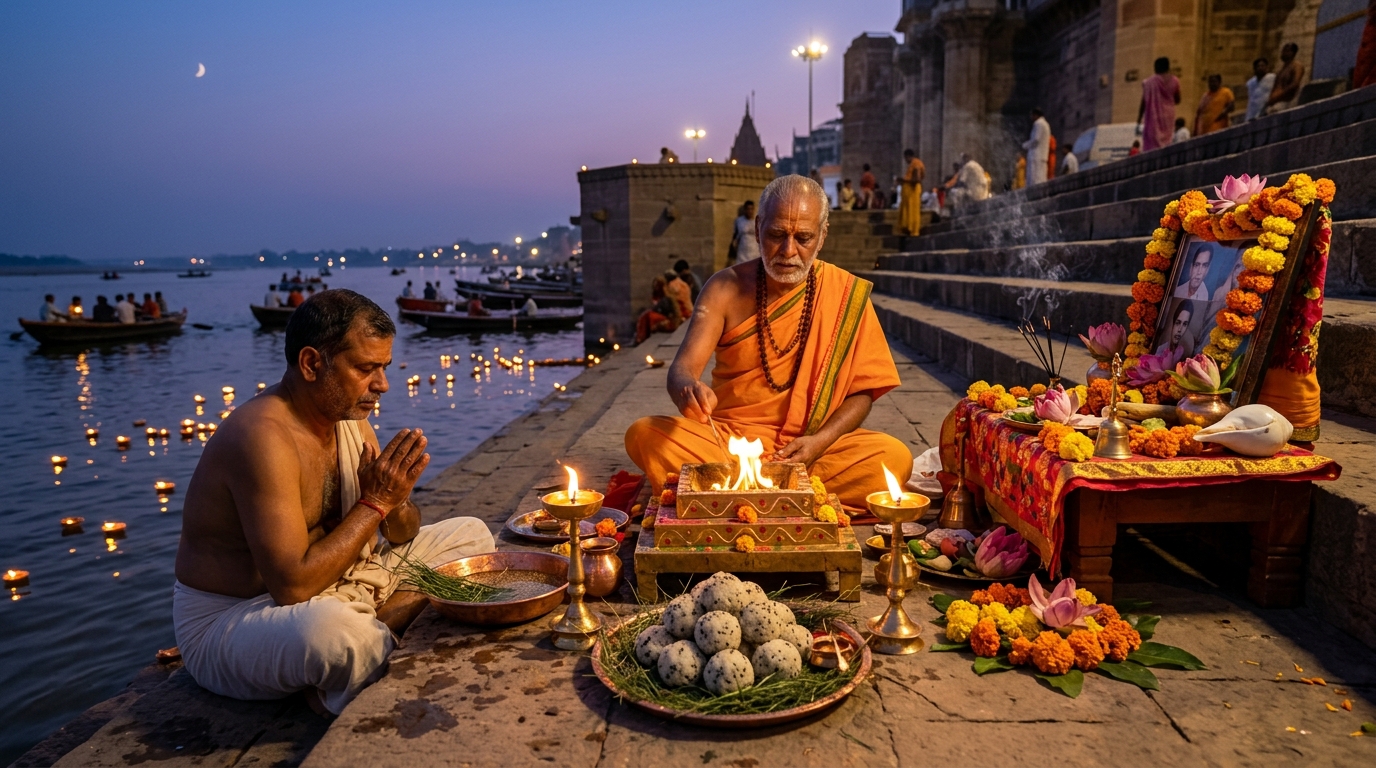

.jpg)


About us
Astrological Analysis and Predictions By Renowned Indian Astrologer and tarot reader Jayashree does astrological predictions and analysis on various individuals and industries that have always come true by the Grace of God.


Top Products
Legal Information
Address
Copyright Consultastrology. Website: www.consultastrology.com